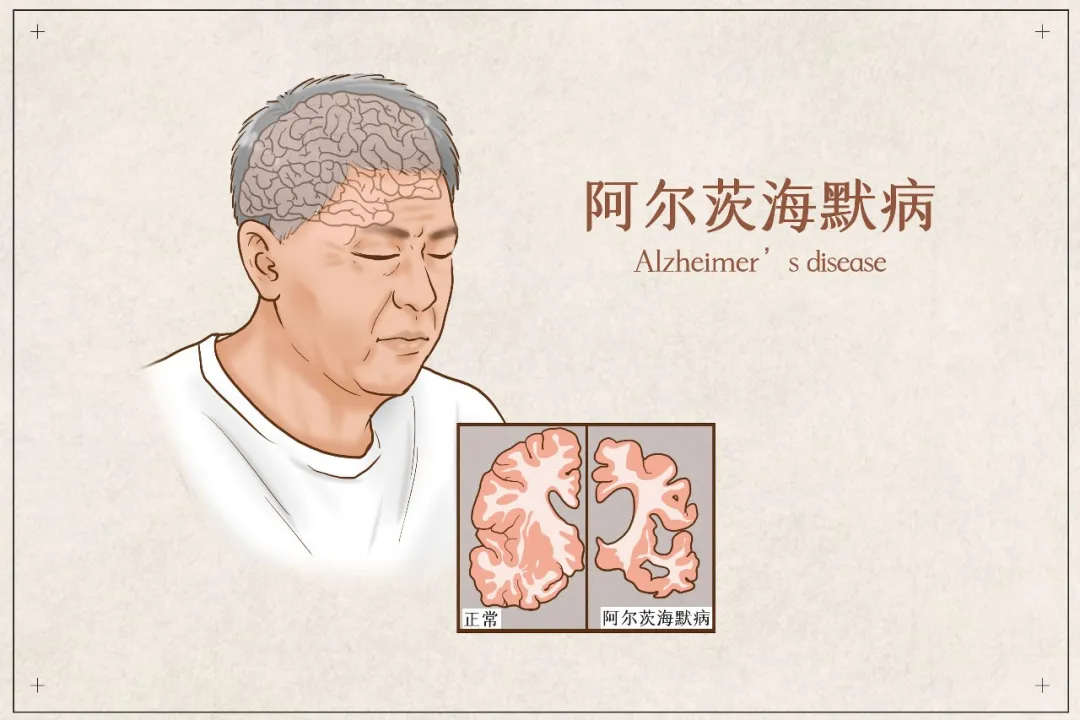
BEIJING — "What did I just say again?" "Where did I put my medication yesterday?" These moments become increasingly familiar after age 40. Many people brush them off as "just getting older," but there is a fundamental difference between occasional forgetfulness and pathological cognitive decline. Normal aging may only slow recall, while Alzheimer's disease (AD) progressively impairs memory, language, judgment, and even basic daily functions like cooking and managing finances.
According to the China Alzheimer's Disease Report 2023, the prevalence of dementia among people aged 60 and above in China is approximately 5.5%, with AD accounting for over 60% of cases. More critically, the brain's pathological changes may begin 15–20 years before clinical symptoms appear. This means: waiting until a loved one "no longer recognizes family" to take action may already be too late — the golden window for intervention has passed.
Why Has Early Alzheimer's Detection Been So Difficult?
Traditional methods for assessing Alzheimer's disease risk have significant limitations:
Cognitive Scales (e.g., MMSE)
Relies on subjective responses; limited sensitivity in early-stage detection. A person can score within normal range while pathology is already progressing silently.
Brain MRI
Can only detect brain atrophy, which typically reflects mid-to-late-stage changes. By the time structural changes are visible, significant neuronal loss has already occurred.
Amyloid PET-CT
High cost, involves radiation exposure, and requires specialized facilities with long waiting times. Not practical for widespread population screening.
Lumbar Puncture (CSF Analysis)
While relatively accurate, it is an invasive procedure with low patient acceptance. Many families hesitate, caught between "is this really necessary?" and "what if we miss something?"
These barriers have left countless families in prolonged anxiety — uncertain whether cognitive changes warrant medical attention, yet unable to obtain clear answers without invasive or costly procedures.
A Breakthrough: Blood Biomarker Testing for Alzheimer's Screening
The landscape is changing. The 2024 Chinese Expert Consensus on Alzheimer's Disease Biomarker Diagnosis highlights that plasma Aβ42/40 ratio, phosphorylated Tau proteins (p-Tau181, p-Tau217), and related markers demonstrate high sensitivity and specificity in identifying Alzheimer's-specific pathology.
In simple terms: when Alzheimer's pathology begins, abnormal Aβ and Tau proteins enter the bloodstream. Using high-sensitivity detection technology, we can now capture these signals from a routine venous blood draw — enabling non-invasive, convenient risk screening that was previously impossible outside of specialized research settings.

Understanding Your Results: What Blood Biomarker Testing Can and Cannot Tell You
Experts emphasize a critical distinction: blood biomarker testing is a risk assessment tool, not a standalone diagnostic test. Positive biomarker results indicate an increased probability of AD pathology but cannot independently confirm a clinical diagnosis — they must be interpreted alongside medical history, cognitive assessment, and imaging findings.
Positive Result
A positive result does not mean you have Alzheimer's disease. It signals that further clinical evaluation is warranted — a prompt for timely follow-up, not a verdict.
Negative Result
A negative result does not completely rule out Alzheimer's. However, it substantially reduces the likelihood that AD-related pathology is the cause of cognitive concerns.
The core value of blood biomarker testing lies in early warning, scientific risk stratification, and reducing unnecessary invasive procedures — helping families move from uncertainty toward informed action.
Who Should Consider Screening?
Based on international guidelines and Chinese expert recommendations, the following groups may benefit from discussing blood biomarker screening with their physician:
Age 50+ with Vascular Risk Factors
Individuals aged 50 and above, especially those with hypertension, diabetes, or hyperlipidemia — conditions known to increase dementia risk through vascular pathways.
Family History of Alzheimer's
Those with first-degree relatives (parents, siblings) diagnosed with Alzheimer's disease — genetic predisposition warrants proactive monitoring.
Persistent Cognitive Decline
Individuals or family members who have observed continuous decline in memory, language, or spatial orientation lasting more than six months.
Proactive Brain Health Management
Those who wish to understand their brain health risk profile and take preventive action — provided they are fully informed about the implications and follow-up pathways.
Important note: Screening is not recommended for asymptomatic individuals without risk factors. Anyone considering testing should fully understand what the results mean — and what steps they would take afterward — before proceeding.

Don't Panic: A Positive Test Is Not a Life Sentence
Even if screening indicates elevated risk, this is not a predetermined fate. The 2024 Lancet Commission on Dementia Prevention, Intervention, and Care reported that approximately 40% of dementia cases could be prevented or delayed by controlling 12 modifiable risk factors.
Evidence-based prevention strategies include:
Control the "Three Highs"
Manage hypertension, hyperglycemia, and hyperlipidemia — vascular health is directly linked to brain health throughout the lifespan.
150 Minutes of Moderate Exercise Weekly
Regular physical activity improves cerebral blood flow, reduces inflammation, and promotes neuroplasticity — protective effects that accumulate over time.
Adopt a Mediterranean Diet
Emphasize vegetables, fruits, whole grains, fish, and olive oil — this dietary pattern is associated with significantly lower dementia risk in longitudinal studies.
Maintain Social and Cognitive Engagement
Reading, learning new skills, playing strategic games, and staying socially connected all contribute to building cognitive reserve.
Address Hearing Loss, Depression, and Sleep Disorders
These often-overlooked factors are among the 12 modifiable risk factors identified by the Lancet Commission — treating them can meaningfully lower risk.
If You Notice These Signs, Here's What to Do
If you or a family member experiences persistent memory decline, personality changes, or decreased daily living capacity — and falls into any of the high-risk categories above — consider the following steps:
Visit a Qualified Medical Institution
Seek evaluation at a reputable hospital with expertise in cognitive disorders. Early assessment by specialists is the most important first step.
Allow Professionals to Determine the Right Tests
Let physicians evaluate whether cognitive testing, blood biomarker analysis, or neuroimaging is appropriate — not all tests are necessary for every individual.
Develop a Personalized Health Management Plan
Work with your doctor to create an individualized intervention or monitoring strategy based on your specific risk profile and health status.
"Early recognition plus active intervention is currently the most effective strategy for addressing Alzheimer's disease." Understanding your risk a little earlier gives you one more measure of control. Preparing one step sooner spares you countless steps of regret.
Concerned About Cognitive Health?
Beijing Edencare Hospital offers comprehensive brain health assessment services, including cognitive evaluation, blood biomarker screening, and personalized prevention planning. Our health management team is here to help you take proactive steps — with clarity, not fear.
References
- Jack CR Jr, et al. "NIA-AA Research Framework: Toward a biological definition of Alzheimer's disease." Alzheimer's & Dementia, 2018;14(4):535–562.
- Alzheimer's Disease Branch of China Association of Geriatric Health Care (ADC). China Alzheimer's Disease Report 2023 [R]. Beijing, 2023.
- Dubois B, et al. "Advancing research diagnostic criteria for Alzheimer's disease: the IWG-2 criteria." The Lancet Neurology, 2014;13(6):614–629.
- Chinese Medical Association Neurology Branch Dementia and Cognitive Disorders Group. "Chinese Expert Consensus on Alzheimer's Disease Biomarker Diagnosis (2024)." Chinese Journal of Neurology, 2024, 57(3): 189–198.
- National Institute on Aging–Alzheimer's Association (NIA-AA). "Research framework for Alzheimer's disease." 2018.
- Livingston G, et al. "Dementia prevention, intervention, and care: 2024 update." The Lancet, 2024;403(10427):685–741.