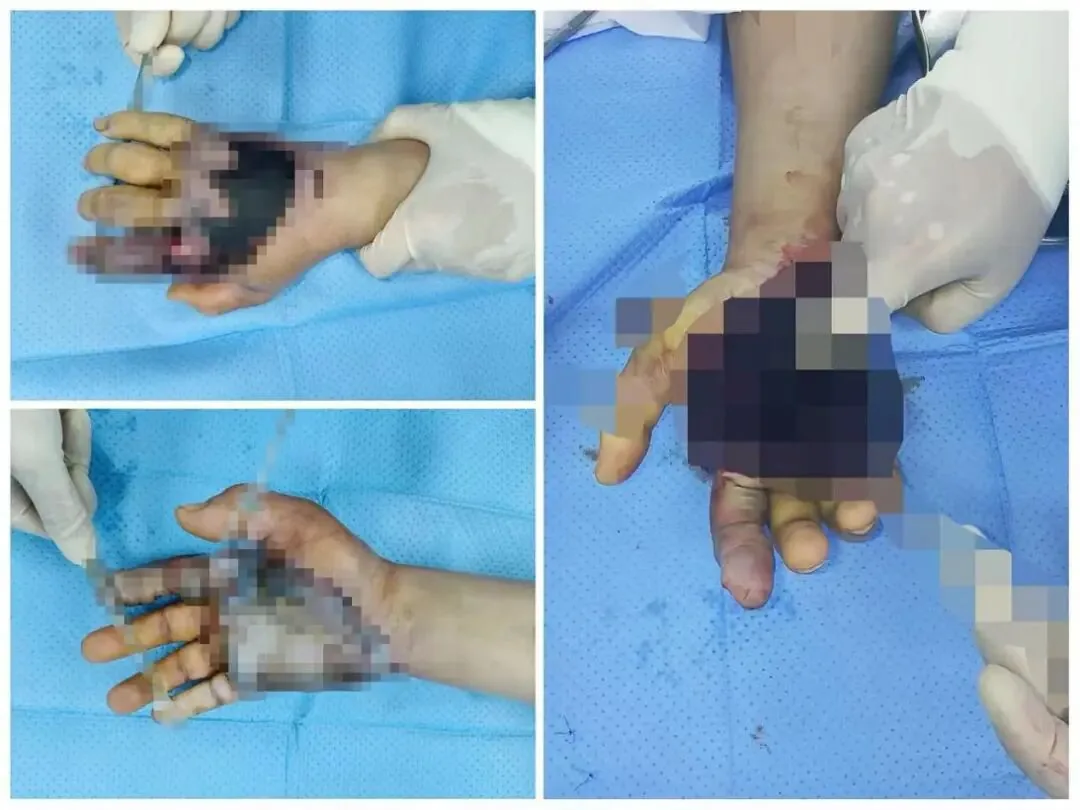
BEIJING — In industrial, agricultural and machine-operation settings, the hands are exposed to high-energy trauma such as roller entrapment, crushing and degloving. Unlike an ordinary cut, this type of combined injury often reaches deeper structures — nerves, tendons and bone — and can directly damage the skin's microcirculation and its blood supply.
In clinical practice, patients and families sometimes assume that "once the bleeding has stopped and the torn skin is stitched up, the treatment is done." From a medical standpoint, however, wound closure is usually only one part of care: restoring microcirculation, keeping arterial inflow and venous return open, and preserving limb function are all important to the outcome.
What Do Purple, Black or Blistered Skin Mean?
After crush or degloving injuries, changes in the skin's appearance are the most direct indicator of whether deeper tissues are still viable:
Blotchy purple or pale skin, and a cooler hand: when the digital arteries are severed or go into severe spasm, blood cannot be pumped smoothly to the fingertips. The fingers rapidly lose their healthy pink colour, becoming pale or dusky purple and cold.
High tension, large blisters, congestion and necrosis: crushing can destroy the subcutaneous veins extensively, so blood "can get in but not out." A large amount of blood pools under the skin, local pressure rises sharply and blood-filled blisters form, which may progress to large areas of blackened, necrotic skin.
"Stitched" does not mean "surviving": if the injury involves the fine vascular network, simply pulling non-viable torn skin together will not restore microcirculation. It may instead accelerate ischaemic necrosis of the fingers and palm through progressive compression by an underlying haematoma.
Why Is Severe Hand Trauma Treated in Stages?
Care for severe hand injuries rarely consists of debridement and suturing alone; it requires a comprehensive assessment of the injury. Common staged strategies include the following phases:
01. Thorough debridement and early infection control. Wounds caused by rotating machinery often carry grease, soil or plant debris. Contamination is heavy and the risk of infection is high. The goal of debridement is to remove non-viable necrotic tissue and foreign material. Where bone is missing or a deep cavity is exposed, materials such as antibiotic-loaded bone cement may be used in selected cases as a temporary cover, to help control local infection and create conditions for later repair.
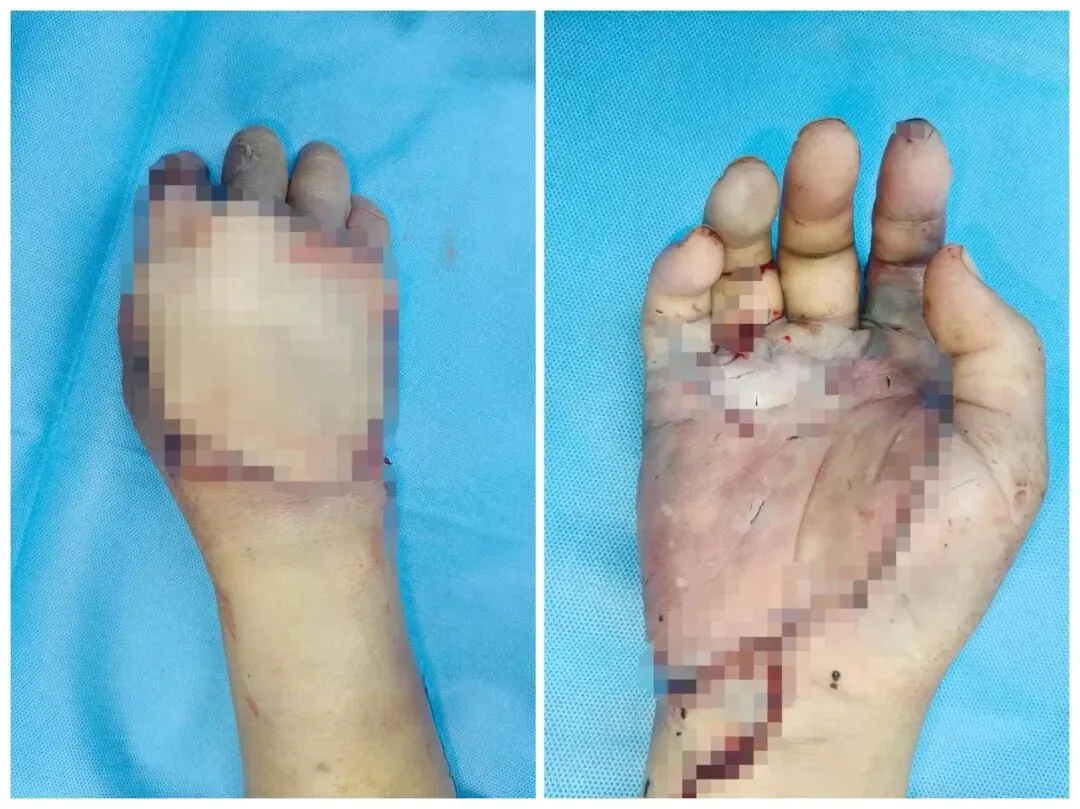
02. Rebuilding the arterial and venous "lifeline". Where perfusion is adequate, tissue survives. For vascular injuries, the damaged vessels are repaired and reconstructed under a surgical microscope using microsurgical sutures, restoring perfusion and the return pathway and improving distal ischaemia and impaired drainage.
03. Staged flap coverage of soft-tissue defects. If the skin of the dorsum or palm has undergone full-thickness necrosis from severe ischaemia and cannot be closed directly, autologous flap grafting may be needed for coverage.
- First stage — restoring drainage and closing the wound: the defect is covered by a suitable method for the wound, and drainage is established through the flap vessels and recipient veins.
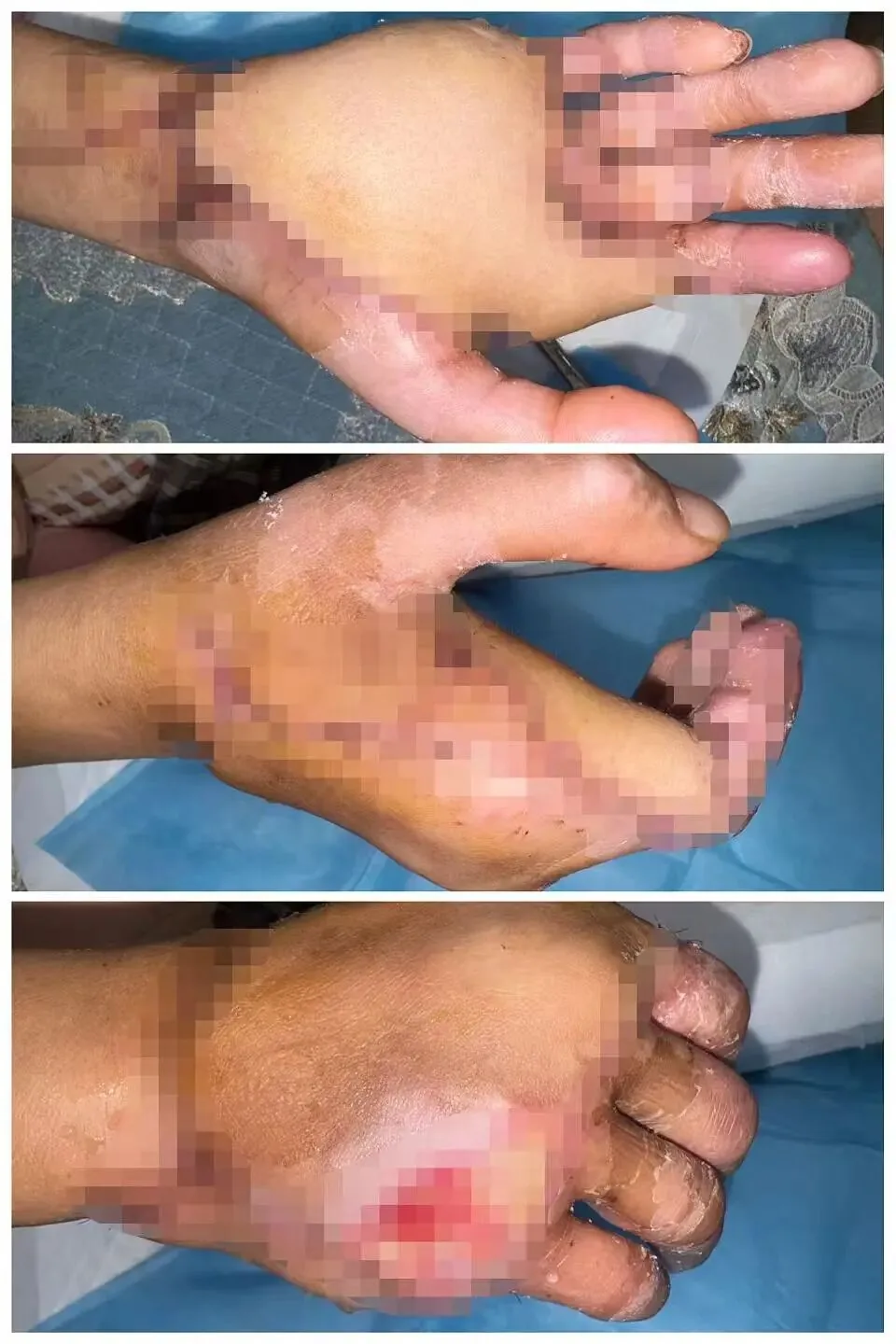
- Second stage — replacing damaged tissue and thinning/contouring: once perfusion to the distal limb has stabilised, further revision may be considered to balance blood supply and appearance.
- Later functional reconstruction: for injuries involving loss or amputation of a finger that could not be replanted in the first stage, microsurgical functional reconstruction can be assessed once the wound has fully healed, to improve grip and pinch function.
How to Give Correct On-Site First Aid
The result of repair in severe hand trauma is closely linked to how quickly the patient reaches care. If a crushing or wringing accident occurs, remember the following points:
- Cut the power and free the hand gently. Stop the machine and disconnect power immediately. Do not reverse the machine or pull the hand out by force, as this can cause severe secondary avulsion of vessels and nerves.
- Apply pressure dressings and keep the wound clean. Use sterile dressings or clean cloth to apply continuous pressure for haemostasis, then bandage and immobilise. Do not sprinkle anti-inflammatory powders, soil or herbal remedies on the wound, as this causes serious contamination.
- Severed or avulsed tissue needs proper preservation. Wrap the tissue or finger in clean dry gauze, place it in a clean plastic bag and seal it tightly, then place it in a container surrounded by an ice-water mixture. Never immerse the tissue directly in water, alcohol, povidone-iodine or ice.
- Seek medical care promptly for professional assessment. Hand injuries should be assessed as early as possible; the timing of any procedure is decided by the treating doctor based on the injury. After a serious injury, it is not advisable to simply close the wound and observe for a prolonged period without the means to assess it; early transfer to a facility with the appropriate treatment capability is recommended.
- Proper on-site first aid — stopping the machine, applying pressure dressings and preserving severed tissue correctly — is the first step in buying time.
- Taking precautions in daily work, handling injuries correctly and seeking timely, appropriate care all support the recovery of hand function.
A Note on Medical Information
This article is for general health information only and is not a medical promotion. It does not constitute medical advice, diagnosis, or treatment recommendations. Each injury is different; treatment decisions should be made by a qualified medical team after individual assessment.
Seeking Hand Trauma Care in Beijing?
Beijing Edencare Hospital's reconstructive and microsurgery team provides evaluation, staged reconstruction, and rehabilitation planning for international patients. Our team supports bookings, interpretation, and visit logistics in English and other languages.