BEIJING — When the weather turns colder, many people notice that their knees feel heavy, tight or vaguely sore. In orthopedic clinics, the change of season is a familiar trigger: degenerative joint symptoms often become more noticeable as temperatures fall.
October 12 marks World Arthritis Day. According to publicly reported figures, roughly 355 million people worldwide live with some form of arthritis, and more than 100 million people in China are affected — an overall prevalence of about 13%, with numbers still rising.
Behind that figure is a fact that is easy to overlook: joint degeneration is not something that only begins in older age. Years of load-bearing strain, muscle imbalance, or a single old injury that never fully settled can all bring wear forward. So when a knee becomes repeatedly uncomfortable as the temperature drops, it is worth more than a shrug about "catching a chill." It may signal that the cartilage's capacity to compensate is declining — and that the wear on the joint surface may be earlier than expected.
How Does Cold Weather Provoke Joint Pain?
Understanding where the pain comes from is the first step in sensible protection. Cold air by itself does not damage a healthy joint. The increase in pain is essentially the combined result of reduced local blood flow, changes in the physical properties of synovial fluid, and pressure imbalance within the joint cavity:
Slower microcirculation. Cold causes the small superficial vessels around the knee to constrict, reducing local blood flow. Research suggests that inflammatory mediators produced by normal metabolism may temporarily accumulate when circulation slows, irritating nerve endings and provoking or intensifying aching.
Thicker synovial fluid. Synovial fluid is the protective layer that keeps the joint gliding with low friction. As ambient temperature falls, its viscoelastic properties change: viscosity rises and resistance to flow increases, movement becomes harder, and the stiffness felt on waking or after sitting for a long time becomes more pronounced.
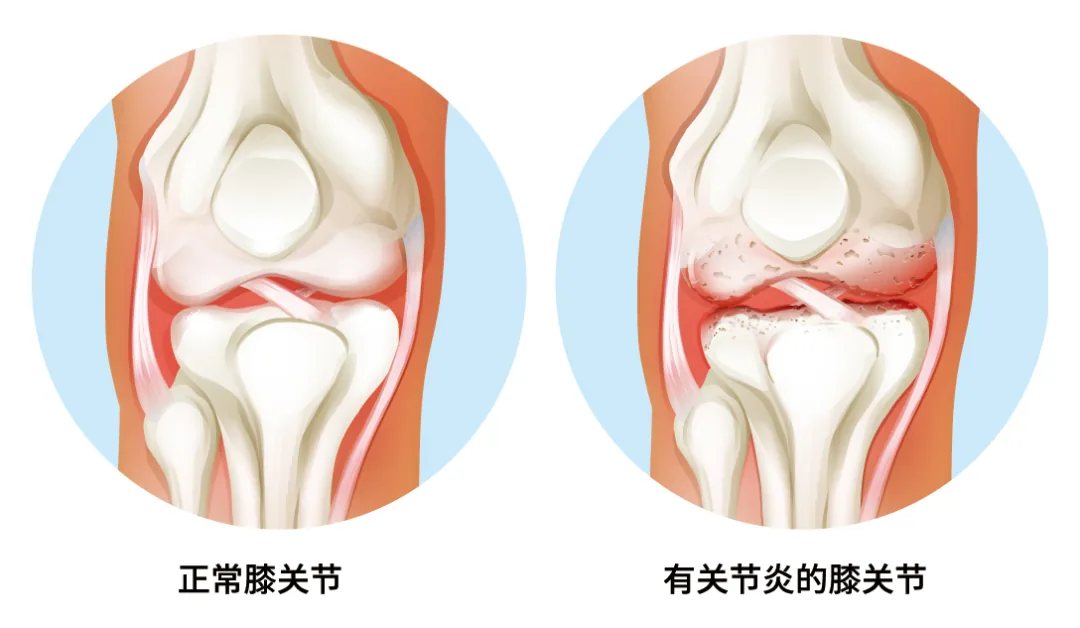
Imbalance of pressure inside and outside the joint. Falling temperatures often come with fluctuations in air pressure. In a degenerated joint, the subchondral bone has less cushioning capacity and is more sensitive to those changes, which can produce a heavy, distended ache.
Note: these internal physiological changes are triggered by temperature, but they act on joint structures that already carry wear — which is why they show up as a particular restriction of movement.
Three Everyday Signs That May Point to Cartilage Wear
Many people assume joint degeneration belongs only to old age. In fact, long-term load-bearing strain, muscle imbalance, or an old injury that has not healed can all bring wear forward. The mechanical load on the knee varies enormously with what you are doing: walking on level ground loads the knee at roughly one to two times body weight; going downstairs raises it to about three to four times; and a full squat can reach seven to eight times body weight.
With that load pattern in mind, three signals deserve particular attention:
Restricted going downstairs, squatting or standing up. Walking on flat ground may still feel fine, yet going downstairs or squatting deeply produces a dull pain deep behind the kneecap. This suggests that the area of cartilage damage cannot absorb the sudden vertical and shear stress, so pressure reaches the sensitive subchondral bone directly.
Brief relief after movement, then worsening again. After sitting for a long time, the first steps are difficult; a few minutes of gentle movement takes the edge off the stiffness. But if walking continues too long, the aching and pain build up again.
A rough, grating sensation under the skin. When the knee bends and straightens, a fine sandy or crackling sensation may be felt with the hand resting on the kneecap. This is a clinical sign that the smooth cartilage surface has been lost and roughened bone surfaces are rubbing as they slide.
Note: recognising these signals is not about diagnosing yourself, but about seeking a professional assessment at the right moment.
Build Strength to Slow Joint Wear
The core principle in protecting a degenerated joint is to reduce abnormal mechanical stress on the joint surface, and to build a natural "muscular brace" around the knee by strengthening the surrounding muscles:
Keep the knee warm and reduce cold exposure. During changes of season it is reasonable to keep the knee warm and limit the effect of cold air on local circulation. But warmth is a supportive measure — it is not a substitute for assessing the state of the joint.
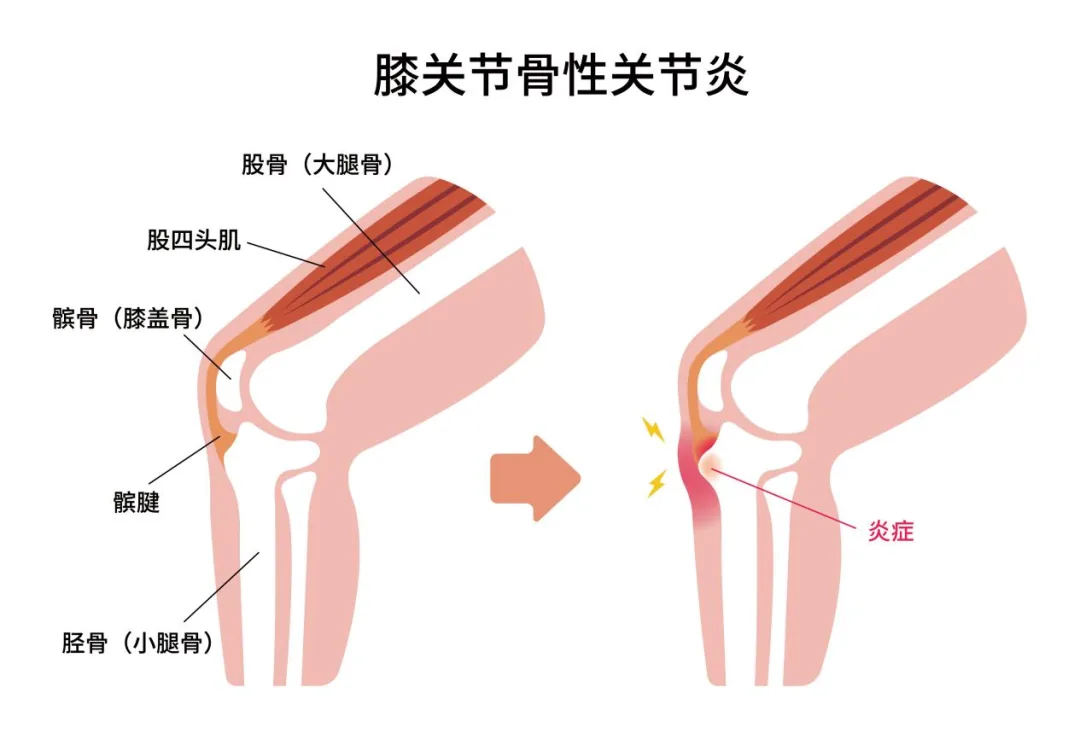
Strengthen the quadriceps to build a "muscular brace". Research suggests that knee stability is related to quadriceps strength. After assessment by a doctor or rehabilitation therapist, some people may be suitable for appropriate strength training. The method, intensity and frequency should be determined individually, and it is not advisable to start training on your own during an acute episode of joint pain.
Adjust activity patterns and limit impact loading. In daily life, consider reducing frequent hill climbing, lifting heavy objects from a deep squat, and repeated stair climbing. Some low-impact activities such as swimming or indoor cycling may be an option when a doctor agrees, although suitability varies from person to person.
When to Seek Medical Care Sooner
If the knee is still uncomfortable after keeping it warm and resting adequately, or if there is redness and swelling, the joint feels hotter than the other side, or movement is clearly restricted, seek care at an orthopedic clinic promptly. Imaging may be arranged where appropriate to clarify the extent of joint disease, and an individualized plan can then be agreed with an orthopedic doctor.
Cold weather comes every year. The earlier the knee's signals are noticed, the more room there is to respond calmly.
A Note on Medical Information
This article is for general health information only and is not a medical promotion. It does not constitute medical advice, diagnosis, or treatment recommendations. Each person's joint condition is different; treatment decisions should be made by a qualified medical team after individual assessment.
Worried About Persistent Knee Pain?
Beijing Edencare Hospital's orthopedic and rehabilitation teams provide assessment, imaging review, and individualized treatment planning for international patients. Our team supports bookings, interpretation, and visit logistics in English and other languages.